In Eastern Rwanda’s Ngoma district, seven maize cooperativestook a bold step in 2021. Instead of facing the market alone, they chose topartner up, laying the foundation for a new, farmer-owned enterprise that wouldchange how smallholder farmers access markets, manage risk, and capture valuefrom their harvests.
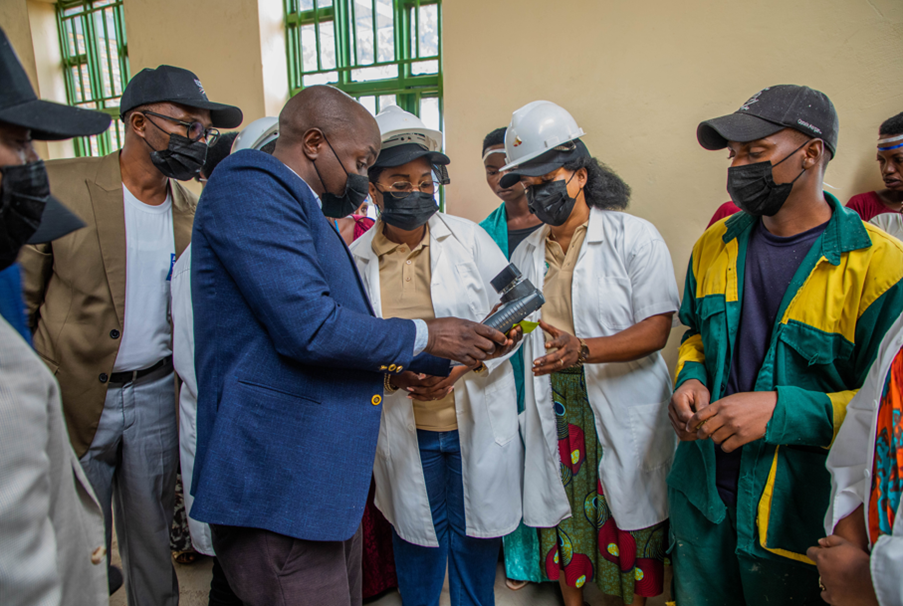
Today, with the inauguration of a modern maize dryingfacility, we celebrate much more than new infrastructure. We celebrate farmerleadership, collective action, and a business model built to last.
The challenge: farming far from fair markets
For maize farmers in Ngoma, distance was more than geography. Located far from major processors, individual cooperatives struggled to negotiate fair prices or secure stable market access. Middlemen filled the gap, often at the expense of farmers’ incomes.
Quality standards posed another barrier. High moisture levels and aflatoxin contamination regularly led to factory gate rejections, wiping out weeks of hard work. On their own, small cooperatives simply did not have the scale or resources to invest in solutions.
The result was too much effort for too little return.
A farmer-led solution: adapting the OSC model
Together with the cooperatives, Agriterra helped adapt the Outgrower Service Company (OSC) model, inspired by earlier successes in tea value chains in Tanzania and Rwanda, to the realities of maize farming.
This was not about starting from scratch. It was about building on what farmers had already created.
The Ngoma OSC was established as a new company, jointly owned by existing cooperatives. By pooling volumes and decision-making power, farmers gained a stronger position in the market, without losing the cooperative values at the heart of their organisations.
The OSC now supports around 3,000 smallholder maize farmers with
- Production services
- Financial services, including access to credit
- Value-adding services that reduce losses and increase returns
Farmers are not beneficiaries here. They are shareholders, decision-makers, and entrepreneurs.
From vision to reality: growing in phases
Phase 1 focused on strengthening the basics. Volumesincreased. Farmers accessed agricultural loans. Confidence grew, including among partners.
That momentum led to Phase 2, supported by Enabel, with two strategic investments aimed at long-standing bottlenecks:
- An organic input production facility, reducing reliance on costly chemical fertilisers
- A maize drying facility, enabling better quality control, reduced post-harvest losses, and stronger negotiating power through improved timing of sales
To safeguard the enterprise’s financial health, the OSC made a difficult but responsible decision to restructure its ownership. Four cooperatives continued as shareholders, while three remained active suppliers and can rejoin once credit challenges are resolved. It was a tough choice, made by farmers, to ensure long-term viability.
.png)
Staying the course through global disruption
Progress is rarely linear. After winning an international tender, delivery of the drying facility was delayed by geopolitical tensions in the Middle East and election-related disruptions in Tanzania.
Yet persistence paid off.
Just before Christmas 2025, the facility arrived in Ngoma, ready to serve the farming communities who shaped this journey from the start.
Why this matters: thriving beyond the project
What makes the Ngoma OSC truly powerful is its sustainability.
This is not a short-term project dependent on ongoing donor support. It is a farmer-owned enterprise with income-generating assets, professional management, and governance rooted in cooperative structures.
When farmers organise, invest collectively, and lead their own businesses, lasting impact follows.
Looking ahead
At Agriterra, we are proud to have partnered with these cooperatives as they strengthened their role in a demanding and volatile value chain. Together, we have helped create a model that delivers local prosperity, today and tomorrow.
With support from Enabel and the Acting Now for Food Security programme (financed by the Ministry of Foreign Affairs of theKingdom of the Netherlands), more than 4,000 farmers connected to Ngoma OSC will benefit from improved maize and soybean production and reduced post-harvest losses.
For farmer organisations across Africa facing similar challenges, Ngoma shows what is possible. Collective action, strategic investment, and farmer leadership can turn hard work into lasting opportunity.
Sowing today. Thriving tomorrow.
.jpg)